


Top 5 USDT Debit Cards for Everyday Spending
If you hold USDT and want to use it for everyday purchases, a USDT debit card makes the process much simpler. Instead of selling your Tether on an exchange and then moving the money to a bank account, you can spend it directly at regular shops, online stores, and other places that accept Visa or Mastercard.
These cards convert your USDT into the local currency at the moment you pay. Because USDT is designed to stay close to one US dollar, you don’t have to worry about the big price swings that come with Bitcoin or other cryptocurrencies. This makes them practical for groceries, subscriptions, travel, and daily spending.
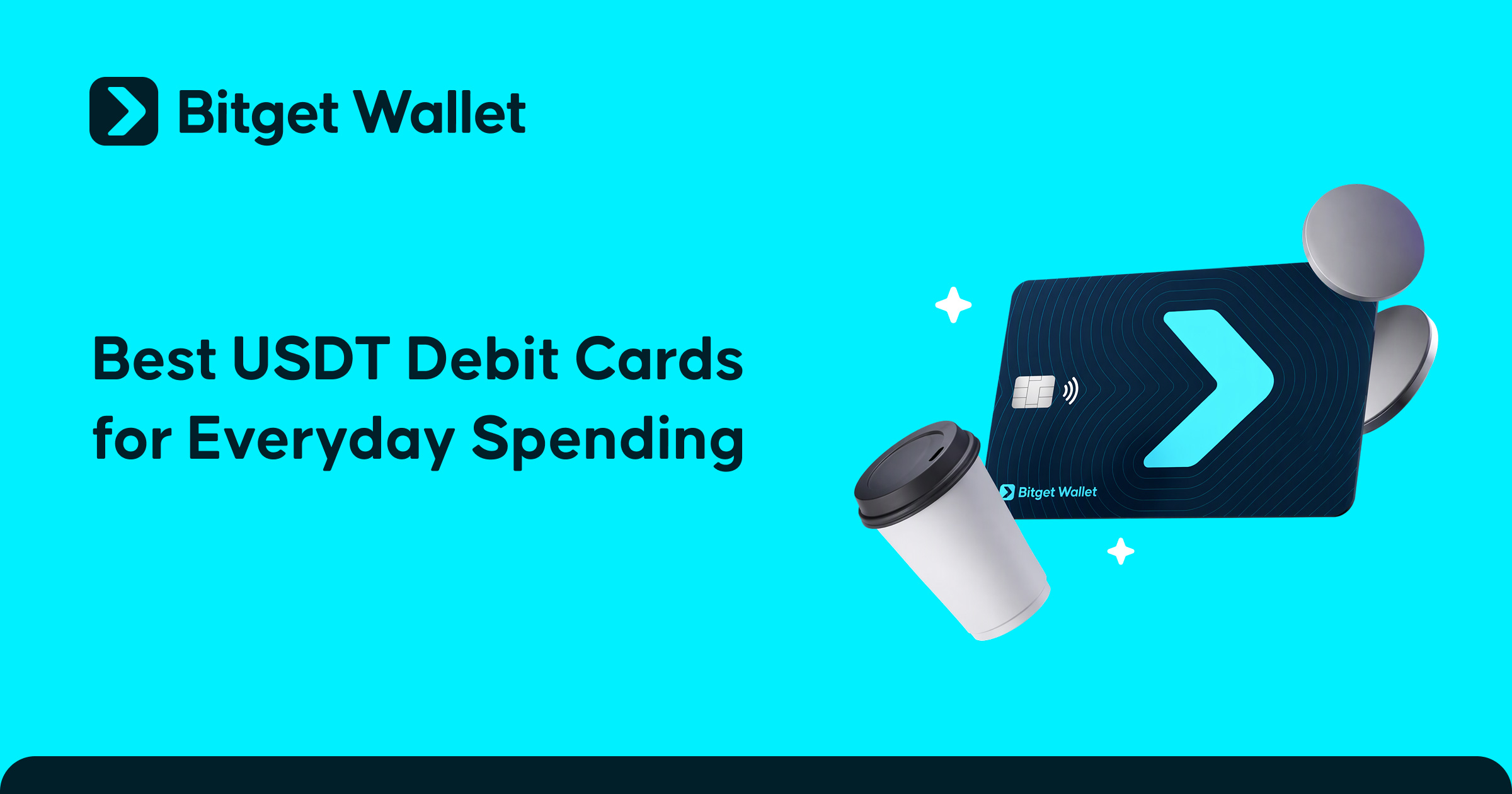
Among the available options, Bitget Wallet Card lets users spend stablecoins with no annual fee and earn rewards in assets rather than only cash.
Several USDT debit cards are available in 2026. Below is a clear look at some of the main options, how they work, and what to consider before choosing one.
Key Takeaways
- A USDT debit card connects a crypto wallet or account to traditional payment networks, enabling real-time stablecoin conversion to fiat for everyday spending at millions of merchants worldwide.
- Top options include the Bitget Wallet Card for asset rewards and the ability to manage everything in one wallet, KAST for USD cashback, and RedotPay for higher spending limits. The best choice depends on your country, spending habits, and preferred reward type.
- Bitget Wallet Card offers up to 3% assetback in USDC, Bitcoin, gold, or tokenized stocks and ETFs, no annual fee, and acceptance at 150 million+ merchants. You can receive money, send stablecoins, and spend with the card without switching between different apps.
What Is a USDT Debit Card and How Does It Work?
A USDT debit card works like a regular debit card, with one key difference: it is funded with Tether (USDT) or other stablecoins instead of money from a traditional bank account.
When you tap, swipe, or enter your card details, the provider converts the required amount of USDT into the merchant’s currency and completes the payment through the Visa or Mastercard network. The store receives a normal payment and does not need to accept crypto.
These cards are sometimes called stablecoin debit cards or crypto debit cards. Most require identity verification. Some are available as virtual cards that can be added to Apple Pay or Google Pay immediately, while others also offer physical cards for ATM withdrawals.
If you are new to spending USDT this way, you can also read our beginner guide on how to spend USDT with a crypto card.
What Are the Top 5 USDT Debit Cards for Everyday Spending?
This section reveals the top USDT debit cards and compares their features so readers can make informed decisions about stablecoin spending.
1. Bitget Wallet Card: The Best USDT Debit Card

Bitget Wallet Card is built for users who want to spend crypto directly from a self-custodial wallet. With Bitget Wallet you can handle the full flow in one app: receive fiat payments, send stablecoins across borders, and spend through the card, local QR payments, bank transfers, or in-app shopping. You do not need to move money between multiple wallets or exchanges just to make everyday purchases.
Assetback Rewards
Earn up to 3% on eligible spending, paid in USDC, Bitcoin, gold, or tokenized stocks and ETFs (including NVIDIA, Google, Tesla, and the S&P 500). All cardholders start at 2%. New users and those who reach the monthly spending threshold move to 3%. For a full explanation of how the rewards are calculated and paid, see how Bitget Wallet Card assetback works.
Global Acceptance
Available in more than 50 markets and accepted at 150 million+ Visa and Mastercard merchants. Instant virtual card with Apple Pay and Google Pay support. Physical cards are available in select regions for ATM withdrawals. Daily spending limit up to $50,000.
Fees
No annual or monthly fee. Exact conversion and foreign-exchange fees are shown in the app. Assetback is structured to help offset those costs within the monthly allowance. If you are comparing cards with low or zero fees, you can also review our full comparison of crypto debit cards with no fees.
Security
Funds remain in a self-custodial wallet until spent. Users keep control of their seed phrase or private keys. Bitget Wallet also maintains a user protection fund. Always store recovery information safely, as loss of wallet access affects top-up and recovery options even if the card itself continues to work.
Availability depends on your country or region and the local card-issuing partner. Check the latest list of supported markets and application requirements in the Bitget Wallet Card Help Center or directly in the Bitget Wallet app. New users can follow our step-by-step guide on how to apply for the Bitget Wallet Card.
2. KAST Card
KAST is a stablecoin-focused Visa card. Users deposit USDT, USDC, or other supported stablecoins, which appear as a USD balance in the app.
Key details:
- Standard plan has no annual fee and offers 1.5% USD cashback on the first $2,000 of eligible monthly spend
- Premium and Private plans offer higher cashback rates (2% and 3%) with larger monthly caps and annual membership fees
- USD spending has no foreign-exchange fee; non-USD spending carries a fee shown in the app before confirmation
- Physical cards and ATM access are available
KAST is suitable for users who prefer USD cashback and a free entry-level option.
3. RedotPay
RedotPay offers a prepaid Visa card that can be funded with USDT and other cryptocurrencies. It is available in a wide range of countries but not the United States.
Key details:
- Virtual card issuance is typically around $10; physical card costs more
- Crypto conversion fee of 1% and an additional fee for spending in a non-default currency
- ATM withdrawals are possible with the physical card and carry higher fees
- No standard monthly or annual fee on the basic plan; cashback is limited or available mainly through a paid plan
- Often noted for relatively high transaction limits on many accounts
RedotPay is an option for users who prioritize higher limits and broader geographic availability outside restricted markets.
4. Coinbase Card
The Coinbase Card is available primarily to users in the United States. Rewards are paid in Bitcoin, with rates commonly ranging from 2% to 4% depending on membership.
Key details:
- Supports a wide range of cryptocurrencies; USDT spending usually requires conversion to a supported asset first
- No foreign-transaction fee on many international purchases for eligible users
- Tied to the Coinbase ecosystem
It is mainly relevant for US residents who already use Coinbase and prefer Bitcoin rewards.
5. Other Options
Binance Card (where still available) supports spending from multiple cryptocurrencies, including USDT, with real-time conversion and BNB-related rewards in eligible regions. Availability has historically been limited mainly to the EEA and parts of Latin America.
Other cards such as MetaMask Card, Wirex, and various regional offerings also support stablecoin spending. Features, fees, rewards, and country availability differ significantly and change over time. Users should verify the latest terms on each provider’s official site or app.
Comparison Overview
| Feature | Bitget Wallet Card | KAST (Standard) | RedotPay | Coinbase Card |
| Network | Visa / Mastercard | Visa | Visa | Visa |
| Rewards | Up to 3% assetback (USDC, BTC, gold, stocks/ETFs) | 1.5% USD cashback | Limited on basic plan | 2–4% in Bitcoin |
| Annual Fee | $0 | $0 | $0 (basic) | Varies |
| Global Reach | 50+ markets, 150M+ merchants | Broad | Wide (not US) | Primarily US |
| Mobile Wallets | Apple Pay, Google Pay | Supported | Supported | Supported |
| Custody Model | Self-custodial | Custodial | Custodial | Custodial |
| Best For | Self-custodial users wanting asset rewards | Simple USD cashback | Higher spending limits | US users wanting BTC rewards |
How to Choose the Right USDT Debit Card for You?
Choosing the right USDT debit card starts with practical fit rather than headline rates alone.
First, confirm that the card is available in your country or region and that you can complete the required identity verification. Country lists change as issuing partners and compliance rules are updated, so check the latest eligibility in the provider’s app or help center before starting an application.
Next, calculate the real cost for the way you actually spend. Look at conversion fees and foreign-exchange fees on the currencies and merchant types you use most, then subtract the rewards you realistically expect to earn after any monthly caps. A higher reward rate is less valuable if most of your spending falls outside the eligible categories or exceeds the cap.
Also weigh these factors:
- Whether you mainly hold USDT and want to load or spend it with minimal extra conversion steps.
- The type of rewards you prefer — cashback in US dollars, Bitcoin, gold, tokenized stocks, or other assets.
- Whether you need a physical card for in-store use and ATM withdrawals, or if a virtual card with mobile wallet support is enough.
- How well the card fits into your existing crypto workflow, including how easily you can top up, move stablecoins across borders, or manage spending alongside other wallet activities.
- Daily and monthly spending limits relative to your typical purchase sizes.
- Any restrictions on merchant categories (for example, certain financial services or high-risk categories may be excluded from rewards).
- Custody preference: whether you want funds to remain in a self-custodial wallet until the moment of spending, or are comfortable with a custodial account balance.
Taking a few minutes to match these points against your own spending pattern usually leads to a clearer decision than comparing reward percentages in isolation.
For practical examples of using the card for everyday online purchases, see how to use the Bitget Wallet Card for online shopping.
FAQs About USDT Debit Cards
What is the best USDT debit card in 2026?
The best USDT debit card depends on your needs, but the Bitget Wallet Card is a strong choice for most users. It offers up to 3% assetback in USDC, Bitcoin, gold, or tokenized stocks, no annual fee, and works directly from a self-custodial wallet. You can spend at 150 million+ merchants without moving funds between multiple apps.
Is there a USDT debit card available?
Yes. Several cards let you spend USDT directly or convert it at the moment of payment at regular Visa and Mastercard merchants. The Bitget Wallet Card is one of the options that supports USDT top-ups and real-time spending.
How does a USDT debit card work?
You load USDT (or other supported crypto) onto the card. When you pay, the provider converts the required amount into the merchant’s local currency through the Visa or Mastercard network. The merchant receives a normal payment and never sees crypto.
Can I use a USDT debit card for everyday spending?
Yes. You can use it for groceries, subscriptions, online shopping, travel, and other daily purchases anywhere Visa or Mastercard is accepted (subject to your card’s limits and merchant category rules). With the Bitget Wallet Card you can also add it to Apple Pay or Google Pay for contactless payments.
Are there fees on USDT debit cards?
Most cards charge a conversion fee or foreign-exchange fee. The Bitget Wallet Card has no annual or monthly fee. Exact conversion and FX fees are shown in the app before you confirm a transaction, and the up to 3% assetback is designed to help offset those costs within the monthly allowance.
Is the Bitget Wallet Card available in my country?
Availability varies by country and region. Check the latest list of supported markets and application requirements in the Bitget Wallet Card Help Center or open the Bitget Wallet app and go to the Card section.
Can I withdraw cash with a USDT debit card?
Yes, with a physical card you can usually withdraw cash at ATMs. However, ATM withdrawals typically carry higher fees and often do not earn rewards. The Bitget Wallet Card offers physical cards in select regions for this purpose.
Do I need to verify my identity to get a USDT debit card?
Yes. Almost all regulated cards, including the Bitget Wallet Card, require identity verification. The process is usually quick and can be completed inside the app.
What rewards can I earn with the Bitget Wallet Card?
You earn up to 3% assetback on eligible spending. Rewards can be paid in USDC, Bitcoin, gold, or tokenized stocks and ETFs (such as NVIDIA, Google, Tesla, and the S&P 500). All users start at 2%, and new users or those who hit the monthly spending threshold move to 3%.
How do I apply for the Bitget Wallet Card?
You can apply directly in the Bitget Wallet app. New users can follow our step-by-step guide on how to apply for the Bitget Wallet Card.
Explore the Bitget Wallet Card
Risk Disclosure
Please be aware that cryptocurrency trading involves high market risk. Bitget Wallet is not responsible for any trading losses incurred. Always perform your own research and trade responsibly. Information is based on issuer pages and recent reviews as of November 2026. Card terms, fees, and availability can change, so always check the latest details in the official app before applying.
 How to Pay for Google Ads with USDT (Step-by-Step Guide)2026-10-30 | 5 mins
 How to Pay for Meta Ads with USDT (Facebook & Instagram Guide)2026-10-30 | 5 mins
 How to Pay for TikTok Ads with USDT Card2026-10-30 | 5 mins



