





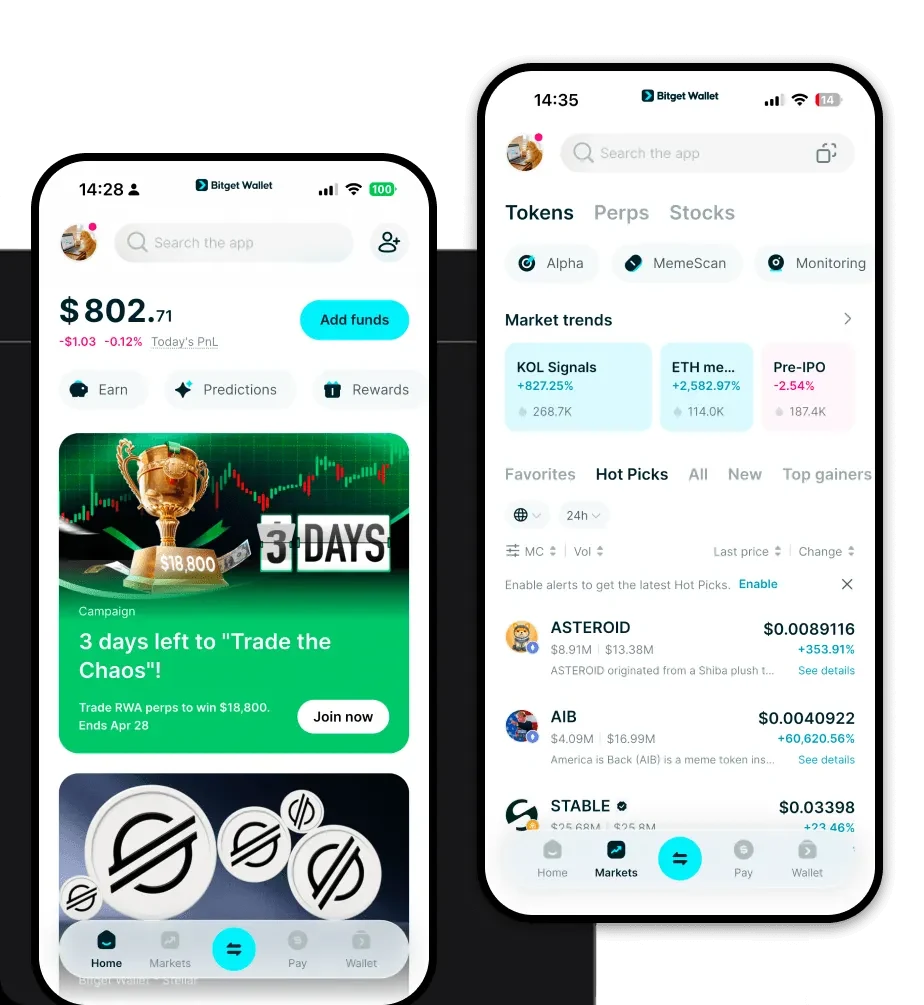
¿Qué es una billetera CAPA?
Una billetera CAPA es una puerta de enlace digital que te permite interactuar con tus activos CAPA en la blockchain. Debido a que CAPA opera en la red EVM (Ethereum Virtual Machine), necesitas una billetera que admita estándares compatibles con EVM para enviar, recibir y gestionar tus tokens de manera efectiva. CAPA es un activo digital que puede almacenarse, gestionarse y negociarse de forma segura utilizando Bitget Wallet, una plataforma en la que confían 40 millones de usuarios para explorar ecosistemas Web3.
Descargar Bitget CAPA Wallet
Elegir la herramienta adecuada es esencial para gestionar tus activos. Para comenzar, puedes descargar Bitget Wallet. Esta aplicación está diseñada para ser tu centro principal de finanzas descentralizadas, ofreciendo una autocustodia total de tus claves privadas. Ya sea que utilices un iPhone, un dispositivo Android o una extensión de navegador de escritorio, Bitget Wallet proporciona una experiencia unificada. Está desarrollada para admitir más de 130 cadenas públicas, lo que garantiza que tus tokens CAPA estén siempre accesibles junto con tus otros activos multicadena sin necesidad de cambiar entre diferentes aplicaciones.
¿Por qué elegir Bitget CAPA Wallet?
- Compatibilidad nativa con EVM: Bitget Wallet está desarrollada con una integración profunda con EVM, lo que garantiza que tus transacciones de CAPA se procesen sin problemas con soporte total para interacciones de contratos inteligentes y gestión estándar de tarifas de gas.
- Agregación de liquidez profunda: Accede a cientos de intercambios descentralizados directamente dentro de la aplicación, asegurando que cuando operes con CAPA, obtengas el mejor precio disponible en todo el ecosistema DeFi.
- Arquitectura de seguridad robusta: Con más de 300 millones de dólares en fondos de protección para el usuario, tus activos CAPA están protegidos por protocolos de seguridad líderes en la industria, blindándote contra las vulnerabilidades comunes de la Web3.
- Interoperabilidad entre cadenas (Cross-Chain): Transfiere fácilmente CAPA u otros activos entre diferentes cadenas, lo que te permite mover tu liquidez donde más se necesite sin pasos manuales complejos.
- Integración de gobernanza descentralizada: Participa directamente en las votaciones de gobernanza de los proyectos que apoyas sin salir de la interfaz de tu billetera, manteniendo tu poder de voto y tus activos bajo un mismo techo.
Cómo crear una billetera CAPA
Configurar tu billetera es un proceso sencillo diseñado tanto para principiantes como para veteranos:
- Instala la aplicación: Descarga Bitget Wallet desde el sitio web oficial o la tienda de aplicaciones de tu dispositivo.
- Crea una nueva billetera: Abre la aplicación y selecciona 'Crear billetera'. Se te pedirá que establezcas una contraseña segura.
- Asegura tu frase mnemotécnica: La aplicación generará una frase de recuperación de 12 palabras. Anótala en papel (nunca la guardes digitalmente), ya que es la única forma de recuperar tu billetera CAPA si pierdes tu dispositivo.
- Verifica y guarda: Confirma tu frase de recuperación dentro de la aplicación para asegurarte de haberla respaldado correctamente.
- Agrega el activo CAPA: Navega a la lista de activos, busca CAPA y agrégalo a tu panel para que puedas comenzar a gestionar tu saldo.
- Trading en intercambios descentralizados: Usa la función de intercambio incorporada (swap) para operar con CAPA frente a otros tokens al instante, aprovechando la alta liquidez proporcionada por los DEX integrados.
- Staking para obtener recompensas: Bloquea tus tokens CAPA en protocolos de staking directamente a través de la billetera para ganar recompensas de rendimiento pasivo basadas en el APY actual de la red.
- Provisión de liquidez en pools: Contribuye con tus CAPA a pools de liquidez para facilitar el trading descentralizado, lo que te permite ganar una parte de las comisiones por transacción generadas por el protocolo.
- Votación de gobernanza: Usa tus tenencias de CAPA para emitir tu voto en propuestas importantes del protocolo, asegurando que tu voz sea escuchada en el proceso de gobernanza descentralizada.
¿Qué puedes hacer con una billetera CAPA?
Mantener CAPA en una billetera sin custodia desbloquea todo el potencial de DeFi. Aquí te mostramos cómo puedes utilizar tus activos:
En qué se diferencian las billeteras CAPA de otras billeteras cripto
Debido a que CAPA existe en EVM, la experiencia de la billetera difiere significativamente de las cadenas que no son EVM. A diferencia de las billeteras de Bitcoin que se basan en el modelo UTXO (Salida de transacción no gastada), una billetera compatible con CAPA utiliza el modelo de cuenta (Account Model), que está diseñado específicamente para gestionar estados e interacciones de contratos inteligentes. Notarás que las tarifas de gas son una parte central de la experiencia aquí; siempre debes mantener un pequeño saldo del token nativo de la red (como ETH) para cubrir los costos de transacción, lo cual es diferente de los modelos de gestión de recursos encontrados en cadenas como EOS. Además, Bitget Wallet optimiza esto al proporcionar herramientas de estimación de gas, asegurando que nunca pagues de más en tus transacciones de CAPA.
