





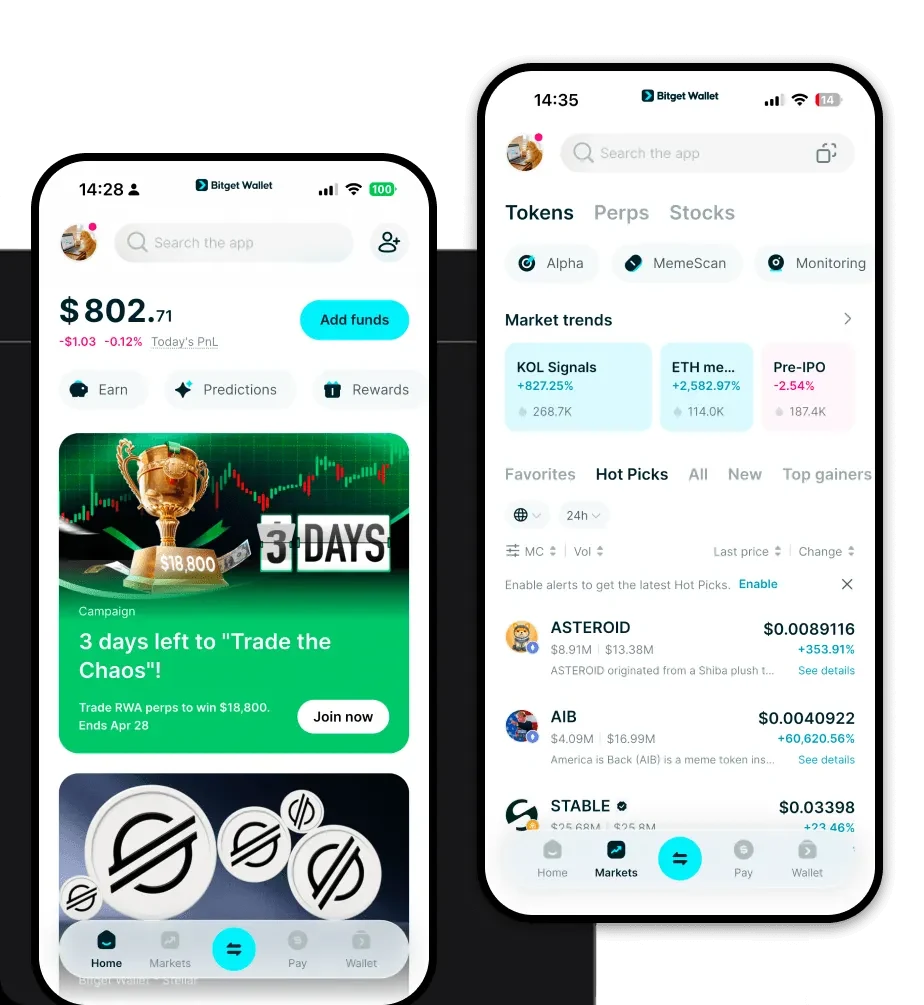
What is a PBP Wallet?
A PBP wallet is a specialized digital gateway designed to interact with the blockchain network hosting your PBP tokens. Since PBP is a digital asset often associated with privacy-focused ecosystems or specific protocol utility tokens, users require a wallet that is both robust and flexible. Bitget Wallet provides a secure and reliable platform for users to manage, store, and trade PBP, allowing them to explore Web3 features with ease. Operating primarily on EVM-compatible networks, a PBP wallet acts as your personal interface for executing transactions, interacting with smart contracts, and maintaining full custody of your digital assets.
Download Bitget PBP Wallet
Accessing your assets should be seamless, which is why we recommend users download Bitget Wallet. Unlike custodial exchanges, this non-custodial solution ensures that you remain the sole owner of your private keys and seed phrases. Whether you are an iOS enthusiast, an Android user, or a desktop browser power user, Bitget Wallet provides a unified experience across all devices. With built-in multi-chain support, you can manage PBP alongside thousands of other tokens without switching between different applications, ensuring your portfolio is always within reach.
Why Choose Bitget PBP Wallet?
Choosing the right wallet is critical for DeFi participants. As an EVM-based asset, PBP thrives in environments where speed and compatibility are paramount. Bitget Wallet is engineered to optimize this experience:
- EVM Compatibility: Seamlessly connect with decentralized applications (dApps) and smart contracts across the Ethereum and BNB Chain ecosystems without configuration hurdles.
- Privacy-Focused Architecture: Designed to respect user anonymity, the wallet supports protocols that prioritize transaction privacy and data obfuscation.
- Decentralized Liquidity: Integrated DEX aggregation ensures you get the best swap rates for PBP by scanning hundreds of liquidity pools instantly.
- Cross-Chain Interoperability: Effortlessly bridge your assets between different chains, allowing you to move liquidity where it is needed most without relying on centralized intermediaries.
- Low Gas Transaction Optimization: The wallet features intelligent gas fee estimation, helping you execute transactions at the most cost-effective times.
How to Create a PBP Wallet
Setting up your PBP wallet is a straightforward process designed for both beginners and veterans:
- Visit the official Bitget Wallet website or your mobile app store to download Bitget Wallet.
- Launch the app and select 'Create a New Wallet' to generate a fresh, secure recovery phrase.
- Back up your mnemonic phrase carefully—never share this with anyone, as it is the only way to recover your assets.
- Once your wallet is ready, use the 'Add Token' feature to search for PBP using its contract address, ensuring it appears on your home screen.
- Copy your wallet address from the main dashboard to receive PBP tokens from exchanges or other users.
What Can You Do With a PBP Wallet?
Holding PBP in a versatile wallet like Bitget unlocks the full potential of your DeFi strategy. Here is how you can utilize your tokens:
- Staking for rewards: Lock your PBP in protocol-approved contracts to earn passive income and help secure the network.
- Trading on decentralized exchanges: Utilize the wallet’s built-in swap feature to trade PBP for other assets without leaving the app.
- Providing liquidity to pools: Deposit your PBP into liquidity pools to facilitate trades and earn a share of the transaction fees generated by the protocol.
- Governance voting: Participate in the decision-making process of the protocol by using your PBP to vote on key development proposals.
- Yield farming: Deploy your PBP into high-yield farming strategies to maximize your returns across various DeFi platforms.
How PBP Wallets Are Different from Other Crypto Wallets
Not all wallets are created equal, especially when dealing with EVM-based DeFi tokens. Unlike legacy Bitcoin wallets that utilize UTXO models for simple transfers, a PBP-compatible wallet must support the complex account-based model required by EVM chains. This means your wallet must be capable of interacting with stateful smart contracts, handling gas fee calculations for complex DeFi transactions, and managing token approvals. While a standard wallet might just store balance, a Bitget PBP wallet acts as a functional dashboard, offering lower latency for swaps and direct integration with decentralized liquidity protocols, ensuring you are never left behind during fast-moving market events.
