





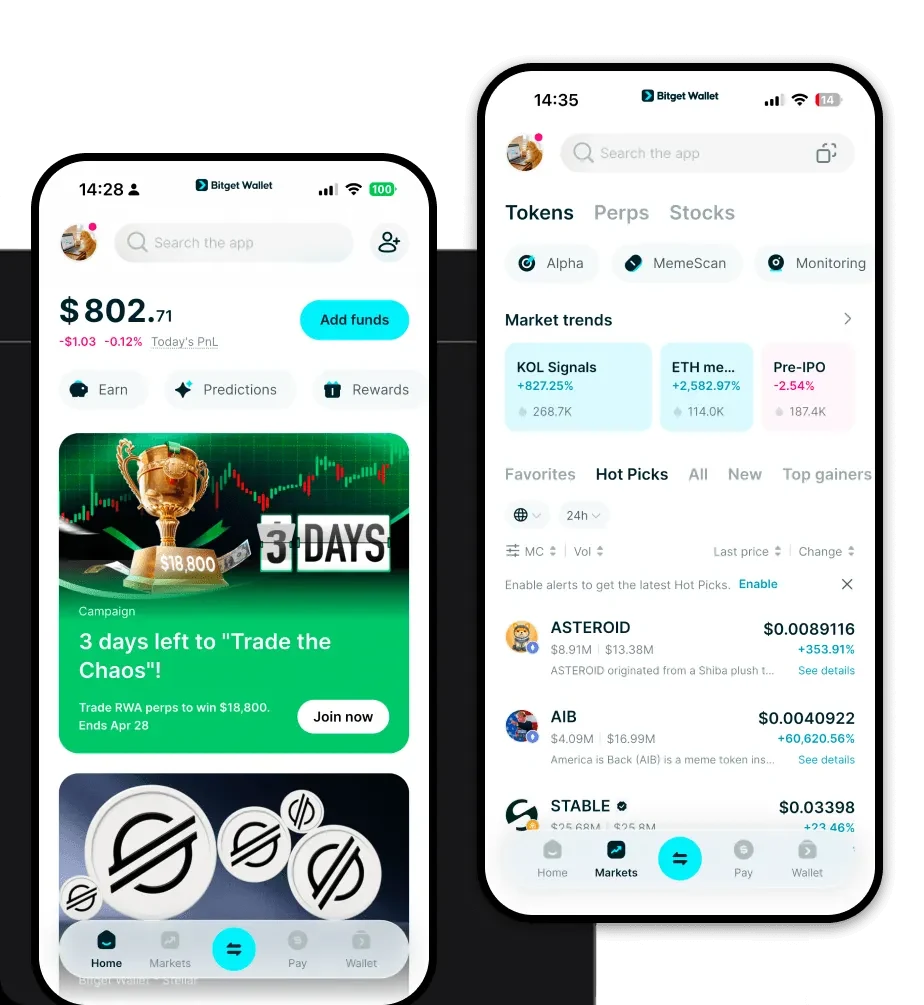
What is a Jotus Wallet?
A Jotus wallet is a digital interface that allows you to interact with the Jotus token, a vibrant asset operating on the EVM (Ethereum Virtual Machine) blockchain. Because Jotus is built on EVM architecture, it requires a wallet that is fully compatible with Ethereum-based standards, enabling seamless integration with decentralized applications and smart contracts. As stated in the official project documentation, Jotus is a crypto asset supported by Bitget Wallet, a secure and reliable Web3 wallet trusted by 40 million users. It allows users to manage, explore, and trade digital assets seamlessly within the Web3 ecosystem.
Download Bitget Jotus Wallet
Getting started with your Jotus journey is simple and secure. To begin, you will need to download Bitget Wallet directly from the official website. Bitget Wallet provides a unified experience across platforms, offering dedicated mobile apps for iOS and Android, as well as a robust browser extension for desktop users who prefer managing their assets on a larger screen. The wallet emphasizes private key self-custody, ensuring that you maintain full control over your Jotus tokens at all times. With support for over 130 mainstream blockchains, Bitget Wallet ensures you aren't just limited to one ecosystem, allowing you to bridge and interact with various networks effortlessly.
Why Choose Bitget Jotus Wallet?
- EVM Ecosystem Mastery: Built specifically to handle EVM-based assets, Bitget Wallet offers native support for Jotus, ensuring you can interact with decentralized exchanges and dApps without compatibility hurdles.
- Advanced Decentralized Trading: The wallet features a built-in DEX aggregator, allowing you to access high liquidity potential for Jotus by scanning hundreds of decentralized exchanges to find the best swap rates.
- Robust Security Architecture: With a $300 million user protection fund and advanced encryption, Bitget Wallet provides institutional-grade security for your community-driven meme assets.
- Smart Contract Interaction: As a meme-focused asset, Jotus benefits from the wallet's optimized DApp browser, which simplifies the process of connecting to liquidity pools and community staking platforms.
How to Create a Jotus Wallet
Setting up your wallet to hold Jotus takes only a few minutes:
- Download and Install: Visit the official Bitget Wallet site and choose the version that matches your device (iOS, Android, or Browser Extension).
- Create a New Identity: Open the app and select 'Create Wallet.' You will be prompted to set a strong, unique password for local app access.
- Backup Your Mnemonic Phrase: The app will generate a 12-word recovery phrase. Write this down on paper and store it offline; never share this with anyone, as it is the only way to recover your assets.
- Verify and Setup: Confirm your recovery phrase within the app to finalize the creation of your account.
- Add Jotus: Once inside, use the 'Add Token' feature and search for the Jotus contract address to make it visible in your main dashboard.
What Can You Do With a Jotus Wallet?
Once your wallet is set up, you can utilize your Jotus tokens in several ways:
- Trading: You can execute rapid swaps on decentralized exchanges directly within the Bitget Wallet interface, taking advantage of the token's high liquidity potential.
- Holding: Use the wallet as a secure, long-term storage solution for your Jotus tokens, keeping them safe from centralized exchange risks.
- Liquidity Provision: By connecting your wallet to supported DeFi protocols, you can participate in liquidity provision to earn rewards while supporting the Jotus ecosystem.
- Speculative Investment: Actively manage your portfolio by tracking price movements and rebalancing your holdings to capitalize on the community-driven nature of the token.
How Jotus Wallets Are Different from Other Crypto Wallets
Unlike wallets designed for UTXO-based chains like Bitcoin, which rely on transaction inputs and outputs, a Jotus-compatible wallet like Bitget uses an account-based model. This model is essential for EVM assets, as it allows for the execution of complex smart contracts and interactions with decentralized finance protocols. Furthermore, while some legacy wallets struggle with high gas fee volatility, Bitget Wallet provides real-time gas estimation, helping you optimize your transaction costs. This EVM-centric approach ensures that your experience is not just about storing tokens, but actively participating in the high-speed, low-friction world of modern DeFi.
