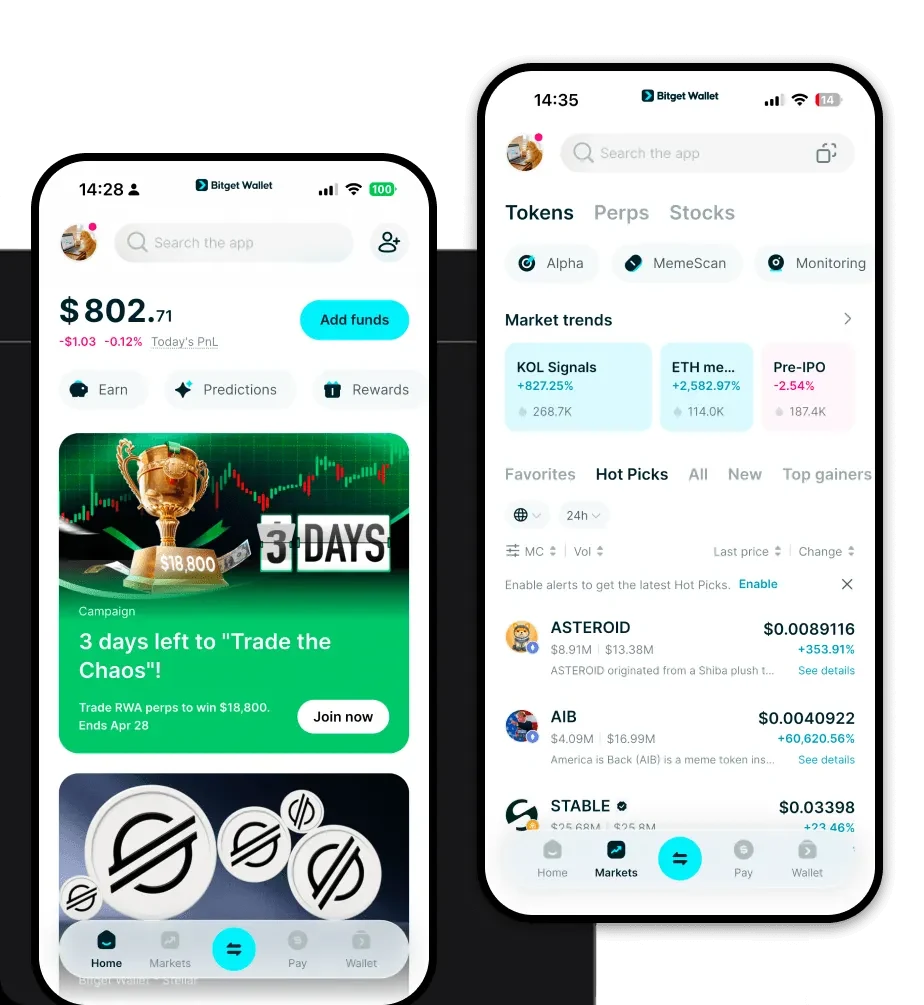
What is a devolution Wallet?
A devolution wallet is a specialized digital interface designed to securely store, manage, and interact with your devolution tokens. As an asset built on the EVM (Ethereum Virtual Machine) ecosystem, devolution relies on the robust infrastructure of Ethereum-compatible networks. This allows for seamless interaction with a vast array of decentralized applications (dApps) and smart contracts.
Are you looking for a reliable and secure crypto wallet for your DEVOLUTION? Bitget Wallet will be your best choice. Trusted by 40 million users, you can freely explore Web3 on Bitget Wallet. Start your journey now!
Download Bitget devolution Wallet
To begin your journey with devolution, you need a gateway that is both intuitive and powerful. Bitget Wallet provides a comprehensive solution for users across all experience levels. Whether you are using an iPhone, an Android device, or prefer managing assets via a browser extension, Bitget Wallet ensures your assets are always within reach.
By choosing to download Bitget Wallet, you gain access to a non-custodial environment where you retain full control over your private keys. This means you are the sole owner of your devolution assets, free from third-party interference. With multi-chain support, you can easily manage your devolution alongside other tokens in one unified interface, ensuring a seamless experience across the entire Web3 landscape.
Why Choose Bitget devolution Wallet?
Choosing the right environment for your devolution tokens is critical, especially for a community-driven asset that thrives on high volatility. Bitget Wallet offers distinct advantages tailored for EVM-based assets:
- EVM Compatibility: As a fully EVM-compatible wallet, Bitget ensures that you can interact with any dApp, DEX, or NFT marketplace within the Ethereum ecosystem without compatibility issues.
- Optimized for Volatility: The app is built to handle high-frequency trading scenarios, allowing you to react quickly to market shifts, which is essential for speculative assets like devolution.
- Decentralized Liquidity Access: Bitget Wallet aggregates liquidity from hundreds of DEXs, ensuring you get the best possible rates when trading your tokens.
- Institutional-Grade Security: With a 300 million USD protection fund, your assets are shielded against potential risks, providing peace of mind while you explore the Web3 space.
- Community-Centric Features: The wallet is designed to support community-driven projects, offering easy access to governance tools and community-led initiatives.
How to Create a devolution Wallet
Setting up your wallet is a straightforward process that prioritizes your security. Follow these steps to get started:
- Install the App: Visit the official website or your mobile app store to download Bitget Wallet and install it on your device.
- Initialize Your Wallet: Open the app and select 'Create a New Wallet'. You will be prompted to set a strong, unique password to secure your local access.
- Secure Your Seed Phrase: This is the most critical step. Write down your recovery phrase (12-24 words) and store it in a safe, offline location. Never share this phrase with anyone.
- Enable EVM Networks: Since devolution is an EVM token, ensure your wallet is set to the correct network (e.g., Ethereum Mainnet or the specific chain where your devolution tokens reside).
- Add devolution Token: Use the 'Add Token' feature and paste the official devolution contract address to ensure your balance is displayed correctly.
What Can You Do With a devolution Wallet?
Once your wallet is set up, you can unlock the full potential of your devolution assets:
- Trading on Decentralized Exchanges: Use the integrated swap feature to trade devolution directly against other tokens with minimal friction and competitive gas fees.
- Holding for Speculation: Securely store your assets in a non-custodial environment while you wait for market opportunities, keeping them safe from centralized exchange risks.
- Liquidity Provision: Participate in DeFi protocols by providing your devolution tokens to liquidity pools, allowing you to earn rewards based on trading volume.
- Community Governance Voting: Use your wallet to connect to project DAOs and cast your vote on community proposals, directly influencing the future of the devolution ecosystem.
- Portfolio Diversification: Easily track your devolution performance alongside other assets in your portfolio, using the wallet's built-in analytics to balance your holdings effectively.
How devolution Wallets Are Different from Other Crypto Wallets
The architecture of a devolution wallet is fundamentally different from wallets built for other blockchain models like Bitcoin (UTXO) or Solana. Because devolution operates on the EVM, the wallet utilizes an Account-Based Model. Unlike the UTXO (Unspent Transaction Output) model, where you manage individual transaction inputs, the account-based model allows for simpler balance management and complex smart contract interactions. Furthermore, while some chains prioritize raw speed at the cost of decentralization, an EVM-based devolution wallet focuses on balancing gas fees and security. You will notice that transaction costs fluctuate based on network congestion, a standard feature of the Ethereum ecosystem that ensures your transactions are processed securely and verified by the network's decentralized validators.