



What is a knit Wallet?
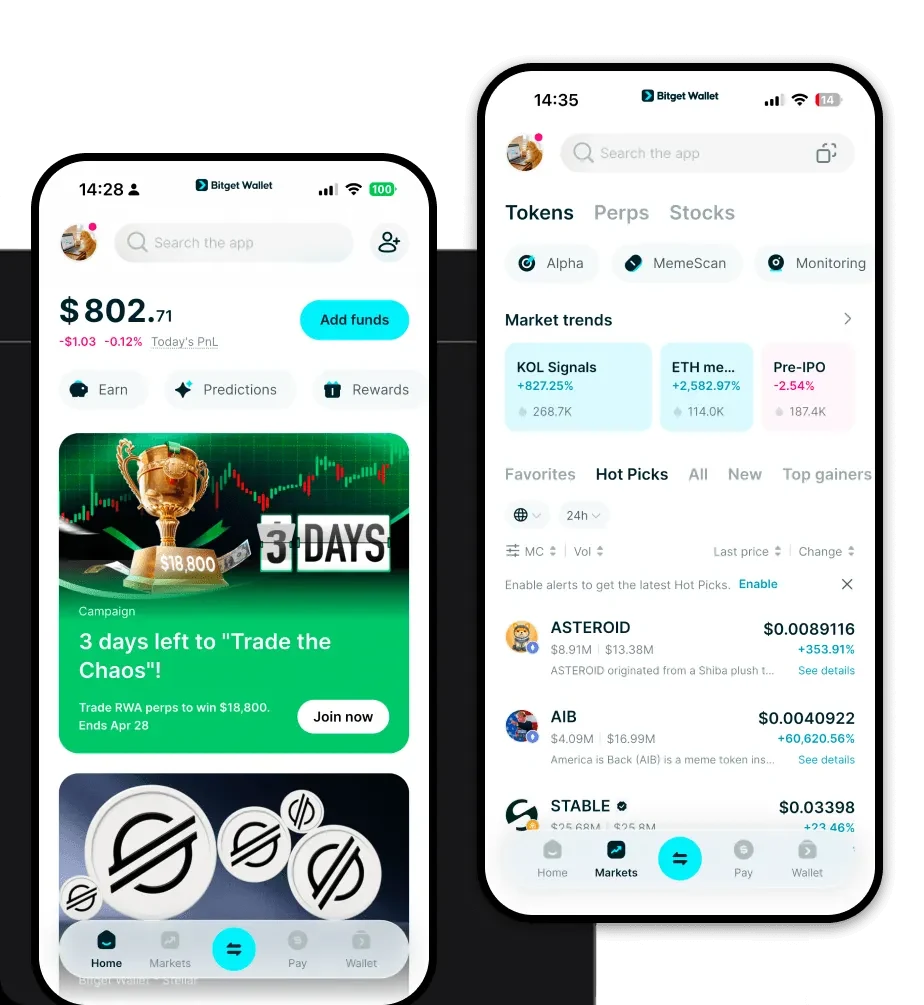
A knit wallet is a specialized digital gateway designed to interact with the knit token, which operates primarily within the EVM (Ethereum Virtual Machine) ecosystem. As a DeFi-centric asset, knit requires a wallet that not only stores your private keys securely but also provides deep integration with decentralized applications, liquidity pools, and yield protocols. Bitget Wallet serves as this essential bridge, offering a robust infrastructure for your assets. Are you looking for a reliable and secure crypto wallet for your knit? Bitget Wallet will be your best choice. Trusted by 40 million users, you can freely explore Web3 on Bitget Wallet.
Download Bitget knit Wallet
Getting started with your knit management is seamless. Bitget Wallet provides a unified, user-friendly interface that eliminates the complexity often associated with EVM-based assets. Whether you are an iOS enthusiast, an Android user, or someone who prefers managing DeFi positions from a desktop browser, Bitget Wallet has a tailored solution for your device.
By choosing to download Bitget Wallet, you gain access to a platform that prioritizes self-custody—meaning you hold your own private keys and have full control over your knit tokens. With support for over 130 public chains and millions of tokens, Bitget Wallet ensures that your knit portfolio remains accessible across various network environments, providing a smooth, non-custodial experience that keeps your assets safe while offering full decentralized control.
Why Choose Bitget knit Wallet?
Selecting the right wallet for EVM-based DeFi tokens like knit is critical for performance and security. Bitget Wallet stands out by offering several distinct advantages tailored for DeFi power users:
- EVM Compatibility: Designed for native interaction with the Ethereum Virtual Machine, ensuring that your knit tokens can seamlessly connect with any dApp, smart contract, or DeFi protocol without compatibility friction.
- Cross-Chain Interoperability: Easily bridge your knit tokens or interact with assets across different EVM-compatible chains, breaking down the silos that often limit DeFi liquidity.
- Decentralized Liquidity Management: Utilize built-in tools that allow you to monitor and manage your liquidity provision positions directly, ensuring you stay agile in volatile markets.
- Automated Yield Optimization: Access integrated protocols that help maximize your returns, ensuring your knit tokens are working for you through smart yield farming strategies.
How to Create a knit Wallet
Setting up your wallet is a straightforward process that grants you immediate control over your digital assets. Follow these five steps to get started:
- Download & Install: Visit the official Bitget Wallet website and download the application for your mobile device or browser extension.
- Create a New Wallet: Open the app and select 'Create a Wallet.' You will be prompted to set a strong, unique password to protect your local access.
- Secure Your Seed Phrase: The app will generate a 12-word recovery phrase. Write this down on paper and store it in a secure, offline location. Never share this with anyone.
- Verify Backup: Enter the recovery phrase in the correct order to confirm you have backed it up accurately.
- Add knit Token: Once your wallet is initialized, use the search bar to find 'knit' and add it to your asset list to view your balance and transaction history.
What Can You Do With a knit Wallet?
Beyond simple storage, a knit wallet acts as a powerful tool for engaging with the DeFi ecosystem. Here is how you can utilize your assets:
- Staking for Yield: Lock your knit tokens into verified smart contracts to earn passive income and contribute to network security.
- Providing Liquidity: Deposit your knit into decentralized exchanges to facilitate trading, thereby earning a share of the transaction fees generated by the protocol.
- Governance Voting: Use your held knit tokens to participate in DAO proposals, giving you a voice in the future development and strategic direction of the project.
- Token Swapping: Utilize the built-in DEX aggregator within Bitget Wallet to exchange your knit for other tokens instantly with minimal slippage and optimal pricing.
- Portfolio Management: Track your total DeFi net worth, including your knit holdings and various yield-generating positions, through a comprehensive, real-time dashboard.
How knit Wallets Are Different from Other Crypto Wallets
Managing a token like knit on an EVM-based wallet differs significantly from managing assets on other networks. Unlike Bitcoin wallets that rely on the UTXO (Unspent Transaction Output) model, an EVM wallet manages an account-based model, which is essential for executing smart contracts. While Bitcoin-focused wallets prioritize simple value transfers, a knit wallet must handle complex data interactions required for DeFi.
Furthermore, because knit operates on an EVM chain, you must be aware of gas fees. Unlike some high-performance chains that use distinct resource models (like CPU/NET/RAM on EOS), the EVM model requires you to pay gas in the chain's native currency for every transaction. Bitget Wallet excels here by providing real-time gas fee estimations and transaction acceleration, ensuring your DeFi trades go through efficiently even during periods of high network congestion.
